How to recognize phishing emails
Phishing emails appear to come from a trusted source and ask you to disclose sensitive information or click on a link or attachment. Vigilance and healthy skepticism are crucial to avoid falling victim to an attack. Be especially cautious with messages that request personal data, login details, or immediate action.
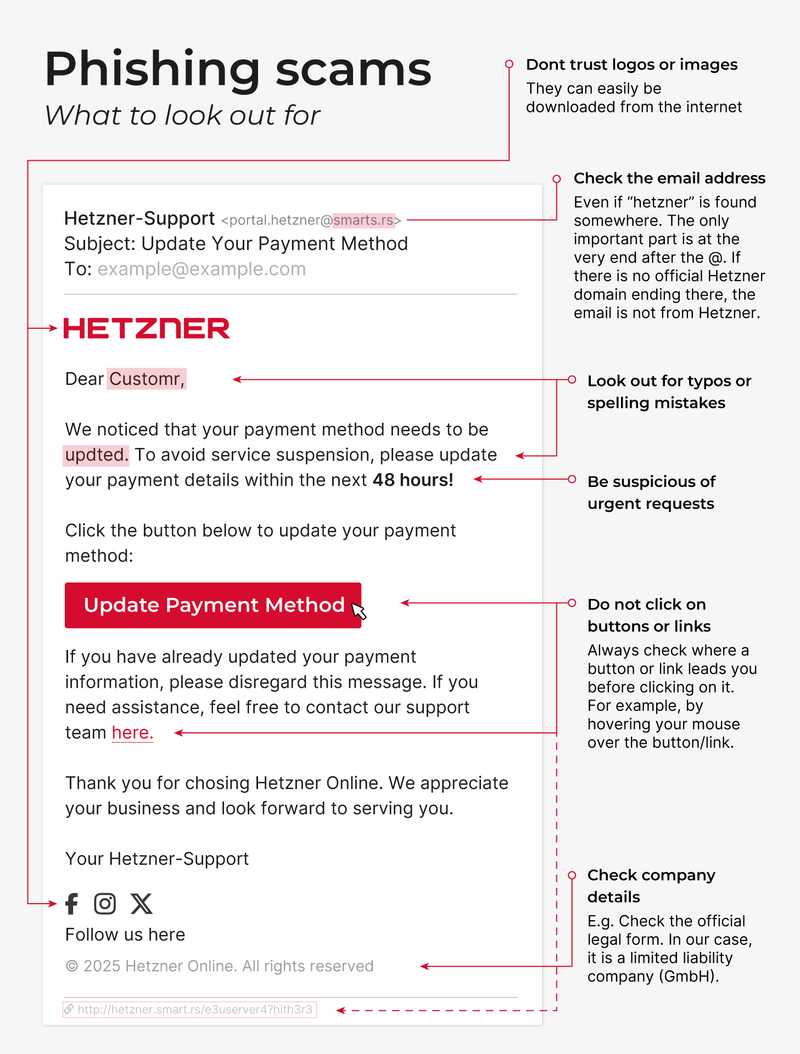
Typical signs of phishing
- Spelling mistakes or poor grammar
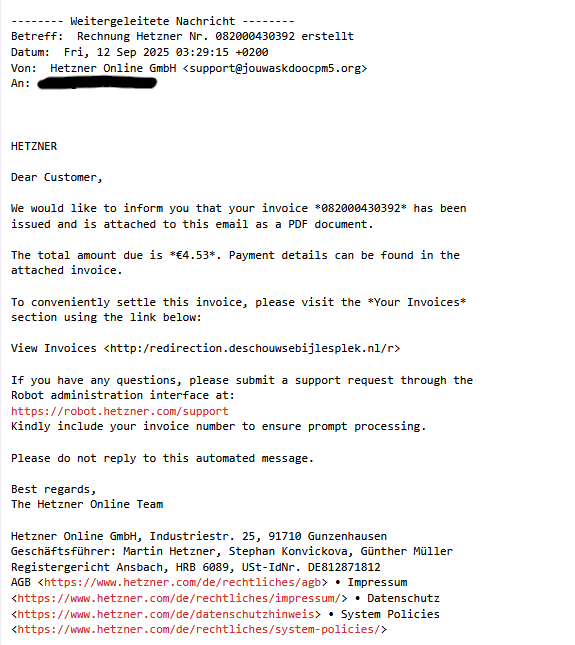
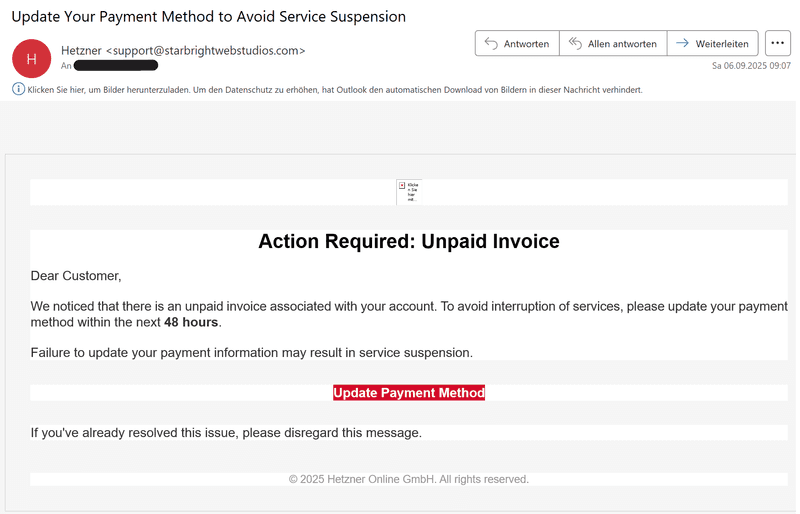
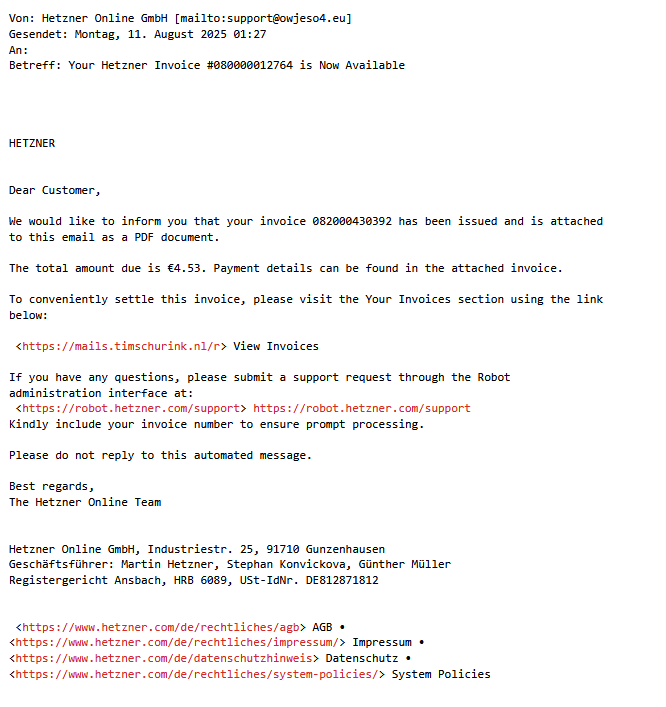
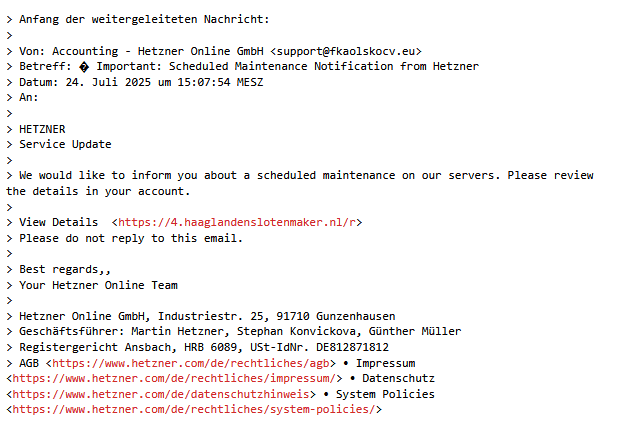
- An unfamiliar or slightly altered sender address, for example, a domain that looks very similar to the real one
- Conspicuous or shortened links where the link text and the actual destination address do not match
- Artificially created urgency, for example, threats of account suspension or payment requests
- Unexpected attachments, especially executable files or password-protected archives
- Impersonal or unusual salutations, for example, “Dear Customer” instead of your name
Example image
What you should do if you receive a suspicious email
- Do not click on links or open attachments.
- Check the sender's address very carefully. Small changes to the domain are often difficult to spot.
- Hover your mouse over links to check the destination address without clicking.
- Forward the suspicious email to our support team or report it via konsoleH. If possible, send us the complete email headers and text so that we can check the message.
- If you have already clicked on a link or entered data, change your password immediately and activate two-factor authentication if you have not already done so.
- Use a separate, strong password for each service. Use a password manager to generate and manage secure and unique passwords.
Prevention and further measures
- Enable two-factor authentication for your account.
- Keep your operating system, browser, and email client up to date.
- Regularly raise awareness among your team about social engineering and phishing.
- Use spam filters and email security features.
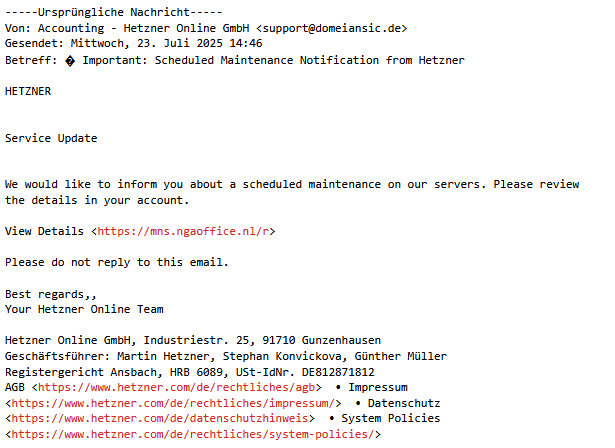
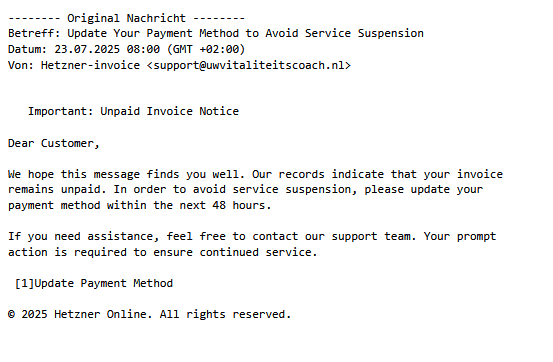
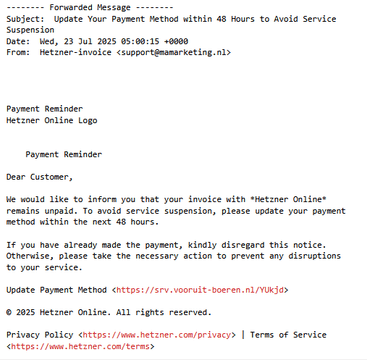
Phishing email collection
The emails shown here are intended to help you recognize phishing emails and better assess suspicious content.